Skip to content
Cashew Plant for Sale
PLC-Operated Fully Automatic Cashew Processing Machinery
5 MT/Day • 10 MT/Day • 20 MT/Day • 30 MT/Day | Turnkey Supply | Design | Install | Commission
Cashew Plant for Sale — Complete PLC-Controlled Automatic Processing Systems
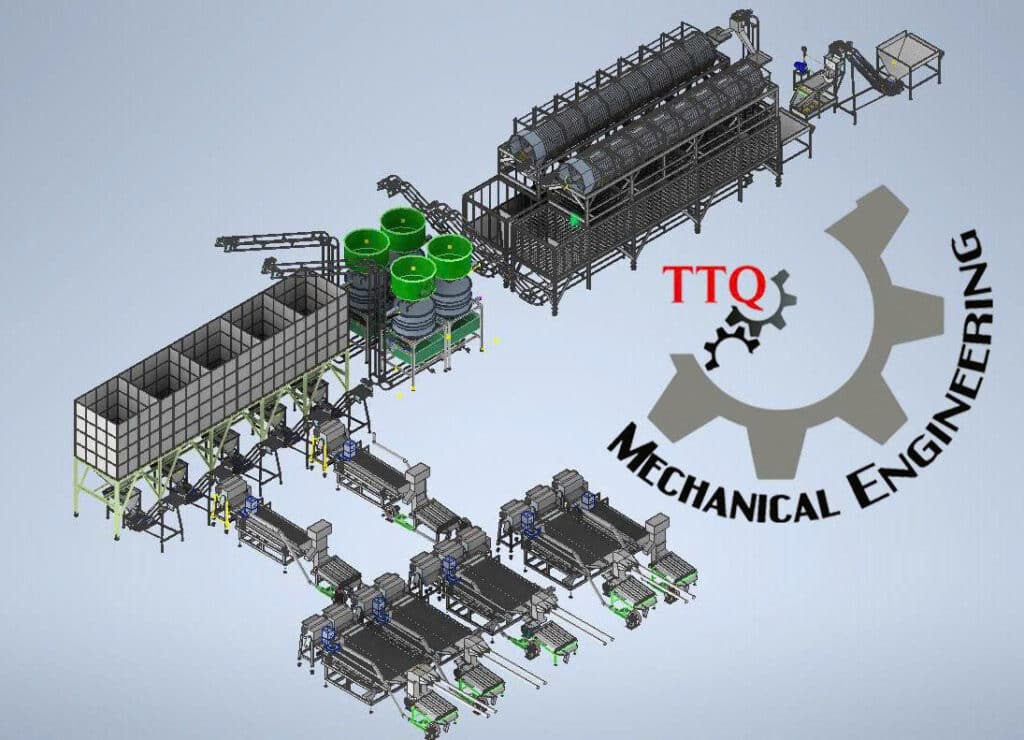
If you are searching for a cashew plant for sale, TTQ Co. Ltd. offers one of the most comprehensive selections of PLC-operated automatic cashew processing machinery available anywhere in the world. Manufactured at our facility in Ho Chi Minh City, Vietnam — the heart of the global cashew processing industry — our complete cashew plants are engineered to transform raw cashew nuts (RCN) into premium, export-ready kernels with maximum efficiency, minimum labour, and consistent, repeatable quality at every batch.
A modern cashew processing plant is not simply a collection of machines. It is an integrated, intelligent production system where every stage — from raw nut intake and steam cooking, through precision shelling, kernel drying, peeling, grading, and vacuum packing — is orchestrated by a central Programmable Logic Controller (PLC). Our PLC-driven architecture ensures that each machine communicates seamlessly with the next, that production parameters are maintained automatically, that alarms are raised the moment a deviation occurs, and that operators can monitor and adjust the entire plant from a single Human-Machine Interface (HMI) touchscreen panel.
Whether you need a 5 MT/day starter plant for a new factory in Africa, a 10 or 20 MT/day expansion line for an existing operation in India, Cambodia, or Brazil, or a 30 MT/day fully automated industrial complex for large-scale export processing, TTQ has a ready-to-deploy solution — or can design one precisely to your requirements.
Why PLC Programmable Logic Control
PLC (Programmable Logic Controller) automation is the global standard for food processing plants. It delivers consistent throughput, reduced human error, real-time diagnostics, energy efficiency, and full audit traceability — all critical for meeting international food safety and export quality standards.

What is a Complete PLC-Operated Cashew Plant?
A complete PLC-operated cashew plant for sale from TTQ Co. Ltd. is a turnkey processing system that covers every single stage of cashew nut processing under one automated control architecture. Here is a detailed walkthrough of every stage and the machines involved:
Stage 1 — Raw Cashew Nut (RCN) Receiving, Cleaning & Pre-Grading
1a. RCN Destoner & Cleaning Unit
The first station in any cashew processing plant is the receiving and cleaning system. Raw cashew nuts arrive from farms containing stones, dust, sand, sticks, and other foreign matter. Our PLC-controlled RCN cleaning system uses a combination of vibratory screens, air jets, and magnetic separators to remove all foreign material before any further processing.
- Capacity range: 500 kg/hr to 5,000 kg/hr
- PLC function: Automatically regulates vibration frequency based on feed rate to optimize separation efficiency
- Output: Clean, de-stoned raw cashew nuts ready for grading
- Stainless steel contact surfaces — food-grade compliant
1b. Automatic Raw Cashew Nut Grading Machine (RCN Grader)
Before steam cooking, raw cashew nuts must be graded by size. Uniform nut sizes ensure that cooking time and shelling blade settings are optimized for each batch — dramatically reducing kernel breakage and improving outturn. Our PLC-controlled RCN grader separates raw nuts into 3–5 size categories simultaneously using rotating drum screens or oscillating mesh screens.
- Grades typically: Below 18mm, 18–22mm, 22–26mm, 26–30mm, Above 30mm
- Capacity: 500 kg/hr to 3,000 kg/hr depending on model
- PLC function: Monitors screen speed and automatically adjusts to feed volume changes
- Each grade is conveyed separately to its corresponding cooking and shelling line
- Significantly improves shelling efficiency and reduces whole kernel breakage rate to below 15%
Stage 2 — Steam Cooking / Boiling System
2a. PLC-Controlled Steam Boiler System
Steam cooking is one of the most critical and sensitive stages of cashew processing. Under-cooking causes hard shells that damage kernels during shelling. Over-cooking causes over-softening and increases CNSL (Cashew Nut Shell Liquid) seepage, which contaminates the kernel. Our PLC-managed steam cooking system eliminates this variability completely.
TTQ supplies cooking systems, both with full PLC integration:
High-Pressure Steam Cooker (Batch Type)
- Suitable for smaller capacity plants (5 MT/day to 10 MT/day)
- Load, cook, and discharge cycle is fully automated via PLC timer sequences
- Pressure relief valves with PLC-monitored pressure transducers for safety compliance
- Integrated with steam boiler (wood chip, shell-fired, or gas) — PLC synchronises boiler output with cooker demand
2b. Cashew Shell Burner / Biomass Boiler Integration
The steam for cooking is generated by the plant’s boiler system. TTQ’s cashew processing plants are designed with an integrated cashew shell burner that uses the waste cashew shell — a by-product of shelling — as biomass fuel to generate steam, dramatically reducing external fuel costs. The PLC system manages the fuel feed rate, air-to-fuel ratio, and steam pressure to maintain optimal combustion efficiency.
- Shell calorific value: approximately 4,200–4,500 kcal/kg — an excellent solid fuel
- PLC monitors boiler steam pressure and auto-adjusts shell feed auger speed
- Excess shell can be pelletised, sold, or used for carbon credit schemes
- Optional integration with wood chip boiler for peak demand periods
Stage 3 — Cashew Nut Shelling System
3a. Automatic Cashew Nut Shelling Machine (Cutting Machine)
The cashew shelling machine — also called the cashew cutting machine — is the centrepiece of any cashew plant and the stage where PLC control delivers the greatest economic benefit. Achieving a high proportion of whole kernels (WW grade) rather than broken pieces (SW, LWP, Pieces) is the single biggest driver of profitability in cashew processing.
TTQ’s automatic PLC-controlled cashew shelling machines use precision-engineered blade mechanisms that cut the shell at exactly the correct depth — deep enough to crack the shell completely, but not so deep as to score the kernel inside. The PLC continuously monitors blade gap, cutting speed, and feed rate, making micro-adjustments in real time to maintain optimal performance as nut sizes vary.
Each shelling line is integrated with a scooping and separation unit that separates the shelled kernels from the shell pieces before the nuts proceed to the dryer.
3b. Automatic Shell & Kernel Separation (Scooping System)
After shelling, the output is a mixture of cracked shells, whole kernels, and partially shelled nuts. The scooping or separation system uses air aspiration, vibratory conveyors, and inclined screens — all PLC-controlled — to separate these fractions. Unshelled and partially shelled nuts are automatically returned to the shelling machine for re-processing.
- Separation efficiency: > 98% kernel recovery
- PLC controls aspiration fan speed to match shelling line output automatically
- Reject loop: Unscooped nuts are counted by sensor and re-fed — PLC tracks re-feed cycles to flag machine adjustment needs
Stage 4 — Kernel Drying (Borma Treatment)
4a. Cashew Kernel Dryer Machine
After shelling, cashew kernels still have the testa (a thin papery skin) clinging tightly to them. To remove this skin in the peeling stage, the kernel must first be dried to reduce its moisture content and loosen the bond between the testa and the kernel surface. This drying stage — often called the ‘Borma’ process — is critical: under-drying leaves the skin attached and causes peeling damage, while over-drying makes the kernel brittle and prone to breaking.
TTQ’s PLC-controlled cashew kernel dryers maintain precise temperature and air circulation settings throughout the drying cycle, ensuring perfectly consistent results across every batch.
| Parameter | TTQ Kernel Dryer Specification |
| Dryer Type | Hot Air Tray Dryer (Batch) |
| Drying Temperature | 60°C – 75°C (PLC-controlled, ±1°C accuracy) |
| Drying Duration | 8 – 12 hours depending on moisture content |
| Moisture Target | < 5% after drying (international export standard) |
| Heat Source | Steam (from shell burner boiler) or LPG / Electric (optional) |
| PLC Control | Auto temperature ramp, hold, and cool-down profile per kernel grade |
| Capacity Range | 200 kg/batch to 2,000 kg/batch | Continuous: 500 kg/hr to 3,000 kg/hr |
| Alarm System | Over-temperature, under-temperature, fan failure — all PLC-monitored |
4b. Cashew Kernel Humidification Chamber
Before peeling, dried kernels often need to be slightly re-humidified to reduce brittleness. This is done in a PLC-controlled humidification chamber that exposes kernels to precise levels of steam or moisture for a carefully timed period, conditioning them for optimal peeling results. Too little humidity = kernel breakage during peeling. Too much = skin sticks back. PLC precision eliminates this guesswork entirely.
- Humidity control: ±2% relative humidity accuracy
- PLC-timed cycle: typically 4–8 hours at 35–45°C with controlled moisture injection
- Integrated with dryer — PLC sequences dryer-out to humidifier-in automatically
Stage 5 — Cashew Kernel Peeling System
5a. Automatic Cashew Peeling Machine
Removing the testa skin from the dried, conditioned cashew kernel without breaking the kernel is one of the most technically demanding stages of cashew processing. Manually, this process requires skilled workers and produces variable results. TTQ’s PLC-controlled automatic peeling machines use a combination of mechanical friction rollers and/or pneumatic airflows to strip the skin cleanly and consistently, producing the white, pristine cashew kernels that command premium export prices.
- Peeling method: Friction roller peeling (for whole kernels) + air aspiration skin removal
- PLC controls roller gap, speed, and pressure based on kernel grade selected via HMI
- Peeling efficiency: > 95% clean peeled kernels per pass
- Skin (testa) is separated by aspiration fan and collected separately
- Operator selects kernel grade on touchscreen HMI; PLC auto-configures machine parameters
- Capacity: 50 kg/hr (single head) to 500 kg/hr (multi-head automatic line)
- Stainless steel rollers and contact parts — food-grade, HACCP-compatible
Stage 6 — Kernel Grading, Colour Sorting & Quality Inspection
6a. Cashew Kernel Grading Machine
After peeling, kernels must be graded by size and shape according to international cashew trade standards. The primary commercial grades — W180, W210, W240, W320, W450, and Pieces grades (SW, LWP, SP, etc.) — command very different prices in the global market. Accurate grading directly determines the revenue you earn from every kilogram processed.
TTQ’s PLC-controlled grading machines use oscillating multi-deck screens with precisely sized apertures to separate kernels into the required commercial size grades simultaneously.
| Grade | Size (kernels/lb) | Description | Typical Market Premium |
| W180 | < 180 | Jumbo — largest whole white | Highest (5–10% above W240) |
| W210 | 181–210 | Super large whole white | Premium |
| W240 | 211–240 | Large whole white | High demand, good premium |
| W320 | 241–320 | Standard whole white (most traded) | Market benchmark |
| W450 | 321–450 | Small whole white | Slight discount to W320 |
| SW / LWP | Pieces | Splits, Large White Pieces | Lower — food ingredient use |
6b. Cashew Kernel Colour Sorter (Optical Sorting Machine)
Even after mechanical grading, kernels may include discoloured, damaged, or off-spec pieces that are not detectable by size alone. TTQ’s PLC-integrated colour sorter uses high-resolution optical cameras and infrared sensors to scan every kernel at high speed, identifying and ejecting any kernel that deviates from the target colour profile (white, ivory, or light yellow for premium grades).
- Sorting speed: 300 kg/hr to 1,500 kg/hr depending on model
- Detection: Discoloured, black-spotted, shrivelled, broken, or contaminated kernels
- Accuracy: > 99.5% reject detection rate with < 0.5% good-kernel carry-over
- PLC integration: Colour parameters are set via HMI touchscreen; the sorter PLC communicates pass/fail data to the main plant control system
- Air ejector speed and sensitivity are adjustable via PLC without stopping the line
- Output data: Number of rejects, % rejection rate, and throughput — all logged for traceability
6c. Manual Quality Inspection Tables
Even in a fully automated cashew plant, a final manual inspection table is standard practice for premium export operations. Operators sit at ergonomically designed conveyor inspection tables and perform a final visual quality check before kernels proceed to packing. TTQ includes stainless steel inspection tables with LED under-lighting in all plant configurations.
Stage 7 — Cashew Kernel Roasting & Flavouring (Optional)
7a. Cashew Nut Roasting Machine
For cashew plants producing value-added roasted products — salted cashews, dry-roasted, honey-roasted, or spice-coated cashews — TTQ offers PLC-controlled rotary drum roasting machines and continuous belt roasters. Precise temperature control is critical for consistent flavour and colour in roasted cashews, and PLC management ensures every batch exits the roaster at exactly the right temperature and colour profile.
- Roasting temperatures: 150°C – 200°C (PLC-regulated, ±2°C accuracy)
- Roasting time: 8–20 minutes (PLC-timed, automatically adjusts based on batch weight)
- Drum roaster capacity: 50 kg/batch to 500 kg/batch
- Continuous belt roaster: 200 kg/hr to 1,500 kg/hr
- Heating source: LPG, electric, or steam — PLC-regulated heat input
- Integrated cooling conveyor — PLC controls cooling fan speed and duration
7b. Cashew Sugar Coating & Flavouring Machine
For premium retail products, TTQ’s PLC-operated coating pan and flavouring drum machines apply sugar glazes, spice mixes, honey coatings, or salt evenly across roasted cashew kernels. The PLC controls rotation speed, coating application rate, and drying temperature to ensure uniform coverage on every kernel.
Stage 8 — Cashew Kernel Packing System
8a. Cashew Nut Vacuum Packing Line
The final stage of the cashew processing plant is packing — and it is the stage that determines shelf life, presentation quality, and compliance with international food safety standards. TTQ’s complete packing line is fully integrated with the plant PLC and covers:
Automatic Weighing & Filling
- Multi-head combination weighers for high-speed accurate portioning
- Target weights: 250g, 500g, 1 kg retail pouches, or 11.34 kg (25 lb) bulk tins and bags
- PLC-controlled fill weight accuracy: ±1–2 grams
- Throughput: 20–60 packs per minute depending on pack size and model
Vacuum Sealing (Bulk Export Packing)
- Double-chamber vacuum sealers for 11.34 kg tins or vacuum pouches
- Vacuum level: < 50 mBar (PLC-monitored for each cycle)
- PLC logs seal cycle time, vacuum level achieved, and alarm on seal failure
- Compliant with HACCP, ISO 22000, and USDA/EU export requirements
The PLC Control System — Heart of the Automatic Cashew Plant
The PLC (Programmable Logic Controller) system is what separates a modern automatic cashew processing plant from a traditional semi-manual operation. TTQ’s plant control architecture is built around industry-standard PLCs, with a central HMI touchscreen panel that gives operators complete visibility and control of the entire processing line.
What the PLC System Controls
|
| Control Point | What PLC Manages Automatically |
| ⚙ | Shelling Machine Speed | Adjusts blade rotation speed and gap to match nut size grade, minimising breakage in real time. |
| 🌡 | Steam Cooker Pressure | Maintains steam pressure within ±0.3 kg/cm² via automatic inlet valve control and boiler feedback. |
| 💧 | Dryer Temperature Profile | Executes multi-stage drying cycles — ramp-up, hold, cool-down — with ±1°C precision. |
| 💨 | Aspiration & Separation | Controls fan speeds across all separation and aspiration units based on product flow sensors. |
| 🎨 | Colour Sorter Parameters | Receives grade selection from HMI and configures optical sorter sensitivity and ejector timing. |
| ⚖ | Weighing & Packing | Coordinates multi-head weigher target weights, fill rate, and pack seal cycle timing. |
| 🔥 | Boiler & Shell Burner | Balances steam demand vs. boiler output; controls shell feed auger speed and combustion air. |
| 📊 | Production Logging | Records input weight, output weight, rejection rates, energy consumption, and machine uptime continuously. |
| 🚨 | Alarm & Safety System | Detects faults (overtemperature, motor overload, pressure fault, jam) and triggers auto-stop + alerts. |
Why PLC Automation Transforms Cashew Plant Profitability
The decision to invest in a PLC-operated automatic cashew processing plant rather than a conventional semi-automatic or manually-intensive plant is one of the most significant and fastest-returning capital decisions a cashew processor can make. Here is a comprehensive breakdown of the financial and operational benefits:
1. Consistent Quality for International Export Markets
Importers in the USA, EU, Australia, and the Middle East require consistent colour, size uniformity, and zero contamination across every shipment. Manual processing introduces unacceptable variability. PLC automation ensures:
- Every batch of kernel drying runs to the exact same temperature-time profile
- Colour sorter parameters are locked to agreed export specifications and logged for audit
- Packing machine fills every container to the specified weight with ±1g accuracy
- Full traceability from raw nut intake batch through to finished packed product — essential for HACCP and ISO 22000 certification
2. Labour Cost Reduction of 40 – 60%
Traditional cashew processing plants in Africa and Asia operate with very large numbers of manual workers — particularly in the shelling, peeling, grading, and packing stages. PLC-automated plants replace repetitive manual operations with machine precision, reducing the headcount required to run a 10 MT/day plant from 80–100 manual workers to 18–25 operators who manage the machines rather than perform the processing manually.
| Stage | Manual Workers Needed | PLC Automatic (Operators) |
| Grading & Cleaning | 8 – 12 | 1 – 2 |
| Shelling | 40 – 60 | 3 – 5 |
| Peeling | 15 – 20 | 2 – 4 |
| Grading & Sorting | 10 – 15 | 2 – 4 |
| Packing | 10 – 15 | 3 – 5 |
| TOTAL (10 MT/Day) | 83 – 122 workers | 11 – 20 operators |
3. Energy Efficiency & Reduced Waste
PLC-controlled process management eliminates inefficiencies that are endemic to manual or relay-logic controlled plants:
- Motors run only when product is present — PLC-controlled variable frequency drives (VFDs) reduce no-load energy waste
- Dryer PLC turns off heating elements automatically when target temperature is reached — no overheating, no wasted fuel
- Steam boiler output tracks real-time cooking demand — boiler never runs at full pressure when cookers are idle
- Reject rates in colour sorting are minimised through calibrated PLC parameters — less good kernel wasted as reject
- Shell biomass is combusted efficiently by PLC-controlled air-to-fuel ratio management — maximising steam output per kg of shell
4. Faster Payback & Higher ROI
The combination of higher whole kernel yield, lower labour costs, reduced energy consumption, and consistent export-grade quality results in a substantially faster return on investment compared to lower-automation alternatives. TTQ’s clients regularly report full plant payback periods of 18 to 36 months on well-operated PLC automatic plants — particularly in markets with strong export premiums.
TTQ Turnkey Cashew Plant Supply — What is Included
When you purchase a cashew plant for sale from TTQ Co. Ltd., you are not simply buying a collection of machines. You are buying a complete project service that takes you from your current position to a fully operational, profitable cashew processing facility. Here is everything included in a standard TTQ turnkey cashew plant package:
Phase 1 — Needs Assessment & Plant Design
- Initial consultation: understanding your raw cashew source, quality, capacity target, budget, and location
- Site assessment (remote or on-site): evaluating utilities availability, access, building conditions
- Detailed plant layout design: factory floor plan with machine placement, conveyor routing, utilities layout, and safety exits
- Process flow diagram: complete production flow from RCN intake to packed kernel output
- Detailed project report (optional add-on): financial projections, ROI analysis, staffing plan, and regulatory compliance guidance
Phase 2 — Machine Manufacturing & Quality Control
- All machines manufactured at TTQ’s Ho Chi Minh City factory under controlled production conditions
- Materials: Food-grade SS304 stainless steel for all product-contact surfaces
- PLC programming: Each machine’s PLC programme is written, tested, and validated at the factory before shipment
- Factory Acceptance Test (FAT): Full plant is assembled, interconnected, and run with real cashew nuts at our factory before dismantling for shipment
- Buyer invitation to FAT: clients are welcome to witness the FAT and approve machine performance before shipping
- CE marking available for EU-bound equipment
Phase 3 — Shipping, Customs & Delivery
- EXW, FOB, CIF, or DDP delivery terms available based on buyer preference and country
- Complete export documentation: commercial invoice, packing list, bill of lading, certificate of origin, phytosanitary certificate (if required)
- Liaison with freight forwarder for sea freight booking — typically 20’FCL to 40’HQ containers depending on plant size
- Import customs documentation support: HS codes, technical specifications, and CE certificates provided for customs clearance
Phase 4 — Installation & Commissioning
- TTQ installation team dispatched to buyer’s factory for machine placement, assembly, and alignment
- All inter-machine conveyors, electrical cabling, and pneumatic lines connected on-site by TTQ engineers
- PLC network commissioning: all PLCs networked, HMI connected, communications tested
- Utilities connection: steam lines, compressed air, water supply, and electrical panels connected and tested
- Wet commissioning with real raw cashew nuts: full production trial run to verify throughput, yield, and quality targets
- Performance verification report issued on completion
Phase 5 — Training & Knowledge Transfer
- Operator training: 5 – 10 days on-site covering machine operation, PLC/HMI use, cleaning procedures, and safety protocols
- Maintenance training: 3 – 5 days on preventive maintenance schedules, lubrication, blade replacement, and common fault diagnostics
- Operating manuals provided in English + buyer’s language (French, Portuguese, Arabic, Swahili — as applicable)
- PLC programme backup provided to buyer on USB drive
Phase 6 — After-Sales Support
- 12-month parts warranty on all TTQ-manufactured components
- Spare parts package included: blades, belts, bearings, seals — sufficient for 6 months of operation
- Remote PLC diagnostics: TTQ engineers can connect to your plant PLC remotely via internet to diagnose and fix software/parameter issues
- On-site service visits available (travel costs applicable after warranty period)
- WhatsApp technical support group: direct access to TTQ’s engineering team
- Annual service contract available for planned preventive maintenance visits
CONTACT FORM
We understand selecting the ideal cashew processing machinery is a crucial decision for your business. Filling our simple contact form will help us grasp your requirements accurately and suggest customized solutions for long-term efficiency gains. Our team will get in touch shortly to initiate the best pricing and features discussion for your upgrade needs.