Skip to content
Setting Up a Cashew Nut Processing Factory in Nigeria
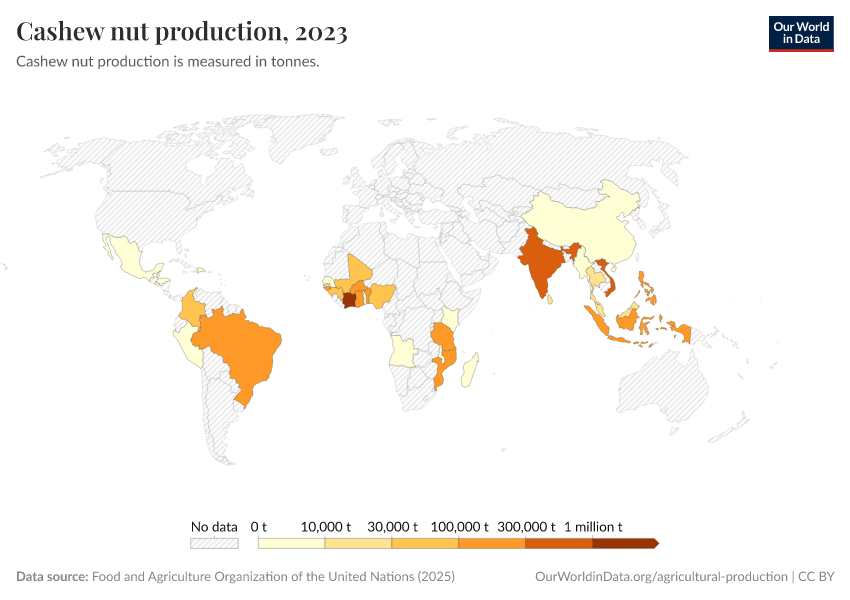
Nigeria stands as Africa’s second-largest cashew producer and one of the continent’s fastest-growing cashew exporters. With an estimated production of 236,000 metric tonnes in 2024 and over 400,000 smallholder farmers cultivating cashew across 21 states, Nigeria presents exceptional opportunities for establishing cashew processing facilities. Despite this massive production capacity, less than 10% of Nigeria’s raw cashew undergoes local processing, creating an urgent need and tremendous business potential for new processing factories in the country.
Why Nigeria is a Strategic Location for Cashew Processing Business
Nigeria’s cashew industry represents the country’s second-largest non-oil export in revenue terms, generating $339 million in export revenue in 2024 according to the Nigerian Export Promotion Council (NEPC). The country’s strategic position in West Africa, abundant raw material supply, and growing government support make it an attractive destination for cashew processing investment.
The cashew cultivation belt spans major producing states including Kogi, Kwara, Oyo, Enugu, Benue, Cross River, Taraba, Ebonyi, and Nasarawa, ensuring year-round access to quality raw cashew nuts. With production projected to surpass 500,000 metric tonnes by 2028, Nigeria’s expanding cashew farming infrastructure provides processors with reliable, locally-sourced raw materials that eliminate complex international supply chains.
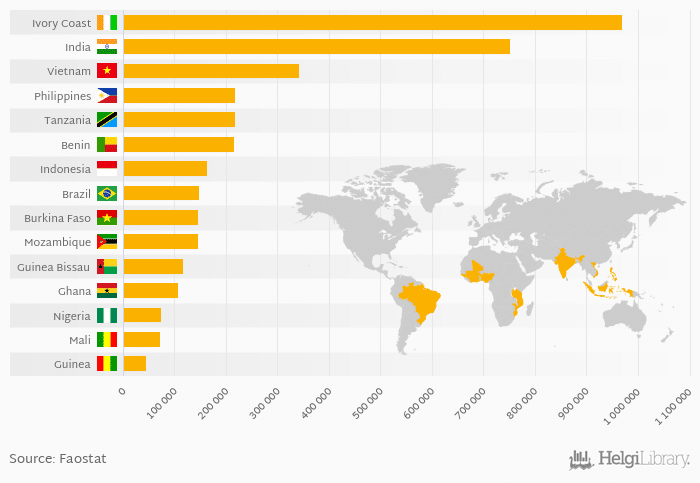
Currently, over 90% of Nigeria’s raw cashew exports flow to Vietnam and India for processing, where they’re transformed into premium cashew kernels that command significantly higher prices in international markets. This massive value chain gap represents a $3.7 billion annual opportunity that Nigerian processors can capture through domestic processing capacity expansion.
Government Incentives and Policy Support for Cashew Factory Setup
Tax Incentives for Processing Facilities
The Nigerian government has implemented attractive fiscal incentives designed specifically to encourage cashew processing investment and reduce reliance on raw nut exports. Through various government agencies and development programs, investors can access substantial tax benefits that improve project economics and accelerate return on investment.
Corporate Income Tax Holidays: Processing factories in Nigeria qualify for 3 to 5-year corporate income tax exemptions under the Pioneer Status Incentive scheme administered by the Nigerian Investment Promotion Commission (NIPC). Agricultural processing enterprises, including cashew processing plants, receive priority consideration for these tax holidays, which begin from the date of first revenue generation.
Import Duty Relief: The government provides zero import duties on essential processing machinery, equipment, and spare parts imported for cashew factory establishment. This includes specialized shelling machines, cutting machines, grading equipment, roasting systems, and packaging machinery. These duty exemptions significantly reduce initial capital investment requirements for new processing facilities.
VAT Exemptions: Value Added Tax exemptions apply to agricultural processing equipment and locally sourced raw materials, further reducing operational costs for cashew processors.
Financial Support Programs
The federal government, recognizing cashew as a key economic driver for rural development and economic diversification, has established multiple financing mechanisms specifically supporting the cashew processing sector.
Prosper Cashew Project: Nigeria is a beneficiary country of the $60 million Prosper Cashew initiative, a USDA-funded program implemented by TechnoServe across West Africa. This project aims to strengthen commercial viability of cashew processing through capacity building, working capital access, and investment facilitation. The program targets improving capacity of 60 processors across Côte d’Ivoire, Ghana, and Nigeria, facilitating $497 million in sector investment over five years.
Special Agro-Processing Loan Window: The National Cashew Association of Nigeria (NCAN) has proposed establishment of a Special Agro-Processing Loan Window (SAP-LW) offering loans at less than 5% interest rates, tied to verified processing contracts. This initiative aims to address the persistent challenge of inadequate access to affordable financing that has limited processing capacity expansion.
Bank of Agriculture Financing: The Bank of Agriculture (BoA) provides specialized agricultural loans for cashew processing enterprises, with extended repayment terms and subsidized interest rates. Processors can access funds for purchasing raw cashew nuts from local farmers, establishing working capital reserves critical during harvest seasons.
Foreign Investment Support: International development finance institutions are actively investing in Nigeria’s cashew sector. British International Investment (BII) announced a $15 million equity investment in cashew processing and warehousing infrastructure in Nigeria in December 2023, with an option for an additional $35 million investment. These international capital flows demonstrate growing confidence in Nigeria’s cashew processing potential and create partnership opportunities for local entrepreneurs.
Export Promotion Support
The Nigerian Export Promotion Council (NEPC) administers the Export Expansion Facility Programme, providing training, market information, export grants, and international buyer connections to cashew processors. Registration with NEPC unlocks access to export assistance programs, participation in international trade fairs, and valuable market intelligence supporting export-oriented businesses.
Nigeria's Cashew Processing Industry Structure
Current Processing Capacity and Market Gap
Nigeria currently operates approximately 15 active processing plants with a combined estimated capacity of 55,750 metric tonnes annually, alongside 8 inactive plants representing an additional 8,500 metric tonnes of dormant capacity. However, with annual production exceeding 236,000 metric tonnes and projected to reach 500,000 tonnes by 2028, the existing processing infrastructure can handle less than 10% of national output.
The Cashew Processors and Packagers Association represents over 20 factories with capacity to process 374 tonnes of cashew kernels daily. Yet these processors struggle to access adequate raw materials as most cashew nuts are exported immediately after harvest. This supply-demand imbalance creates exceptional opportunities for new processing facilities that can establish direct relationships with cashew farmers and farming cooperatives.
In 2024, local processors purchased an estimated 50,000 metric tonnes of raw cashew, representing a growing trend in domestic processing driven by government incentives and improving access to working capital. This upward trajectory signals strengthening domestic processing infrastructure and growing confidence among investors in the sector’s profitability.
Raw Cashew Supply Chain and Farming Infrastructure
Nigeria’s cashew cultivation occurs primarily across 21 states spanning the country’s middle belt and southern regions. Over 300,000 smallholder farmers dedicate an estimated 600,000 hectares to cashew farming, with individual farm sizes typically ranging from 1 to 5 hectares. Major cashew-producing states include Kogi (the largest producer), Kwara, Oyo, Enugu, Benue, Cross River, Taraba, Ebonyi, Edo, Nasarawa, Anambra, and Delta.
Cashew trees in Nigeria are fairly quick-bearing, with grafted rootstocks producing crops within three years when cultivars suited to local climatic conditions are planted. Popular varieties include Hastom’s hybrid HOC-038 and Brazilian jumbo-sized cultivars, which produce large nuts in high demand for the premium snacking industry. These trees require relatively low maintenance and minimal water compared to other crops, making cashew farming an attractive extensively managed agricultural enterprise.
The harvest season typically runs from January through May, with peak harvesting occurring from February to April. During this period, raw cashew price ranges from ₦400 to ₦600 per kilogram at farm gate, depending on quality, moisture content, and market dynamics. This seasonal concentration of raw material availability necessitates substantial working capital for processors to purchase and store adequate inventory for year-round processing operations.
Essential Processing Equipment and Machinery Requirements
A modern cashew processing facility requires specialized equipment at multiple production stages to transform raw cashew nuts into export-quality kernels that meet international food safety standards and buyer specifications.
Core Processing Machinery
Pre-Cleaning and Sizing Equipment: Raw cashew handling systems including elevators, de-stoners, floatation tanks, and dryers ensure incoming nuts meet moisture and cleanliness specifications before processing. Sizing machines grade raw nuts by size, improving shelling efficiency and kernel recovery rates. Investment in quality pre-cleaning equipment: $15,000 to $40,000 depending on capacity.
Steam Cooking Systems: Industrial steam boilers cook raw cashew nuts to optimal temperature and moisture levels before shelling. Proper steaming is critical for maximizing whole kernel recovery and minimizing breakage during shell removal. Commercial steam boilers for medium-scale operations cost $25,000 to $60,000.
Cashew Shelling Machines: Automated or semi-automated cashew shelling equipment forms the core of processing operations. Modern facilities increasingly adopt mechanical shelling technology, though many Nigerian operations still rely on manual shelling supplemented by semi-automatic systems. A complete shelling machine line processing 1 tonne per day costs approximately $80,000 to $120,000, while larger 5-10 tonne daily capacity systems range from $300,000 to $500,000.
Peeling Machinery: After shelling, cashew kernels require testa (brown skin) removal. Peeling machines use steam or heat treatment followed by mechanical rubbing to remove the testa without damaging kernels. Peeling equipment capacity matched to shelling output costs $40,000 to $80,000.
Grading and Sorting Equipment: Gravity separators, vibrating sieves, electronic color sorters, and optical grading systems classify kernels by size, color, defect levels, and quality grades according to international standards. Premium whole kernels (W180, W210, W240, W320) command significantly higher prices than broken kernels, making accurate grading essential for profitability. Automated grading systems cost $50,000 to $150,000 depending on sophistication and throughput capacity.
Roasting and Flavoring Systems: For processors targeting domestic markets or value-added exports, roasting equipment with temperature controls and flavoring systems expand product portfolios beyond raw kernels. Batch roasters for small to medium operations range from $10,000 to $35,000.
Packaging Machinery: Vacuum sealers, nitrogen flushing systems, and automated packaging lines preserve kernel freshness and meet export packaging requirements. Modern packaging lines with weighing, sealing, and labeling capabilities cost $30,000 to $100,000 depending on automation levels and capacity.
Total Machinery Investment Estimates
For a medium-scale cashew processing plant targeting 5,000 to 7,000 metric tonnes annual raw nut processing capacity:
- Small-scale operation(500-1,000 tonnes/year): $150,000 to $300,000 in processing equipment
- Medium-scale facility(5,000-7,000 tonnes/year): $600,000 to $1.2 million in complete processing machinery
- Large-scale industrial plant(10,000+ tonnes/year): $2 million to $4 million for fully automated processing lines
These estimates benefit significantly from government-provided import duty exemptions on processing machinery, which can reduce equipment costs by 20-35% compared to purchasing without duty relief
Investment Requirements and Setup Costs for Nigeria
Comprehensive Capital Investment Analysis
Establishing a cashew processing factory in Nigeria requires carefully structured capital allocation across land acquisition, facility construction, equipment procurement, working capital reserves, and regulatory compliance costs.
Land Acquisition and Site Development: Suitable industrial land in cashew-growing regions costs between ₦2 million to ₦10 million per hectare (approximately $2,600 to $13,000 at current exchange rates), depending on proximity to urban centers, existing infrastructure, and state-level land policies. A medium-scale processing facility typically requires 2 to 5 hectares for factory buildings, raw material storage, finished product warehousing, worker facilities, and future expansion space.
Site development including land clearing, leveling, fencing, internal roads, drainage systems, and utilities connection adds ₦5 million to ₦15 million ($6,500 to $19,500) to initial investment depending on site conditions.
Factory Construction and Infrastructure: Building a modern cashew processing facility with proper ventilation, fire safety systems, waste management infrastructure, worker amenities (changing rooms, canteens, sanitation facilities), and administrative offices requires substantial capital investment.
For a facility designed to process 5,000 tonnes annually:
- Building construction and roofing: ₦80 million to ₦150 million ($104,000 to $195,000)
- Electrical installation and generator backup: ₦15 million to ₦30 million ($19,500 to $39,000)
- Water supply infrastructure: ₦5 million to ₦10 million ($6,500 to $13,000)
- Fire safety and security systems: ₦10 million to ₦20 million ($13,000 to $26,000)
Total facility construction costs typically range from ₦150 million to ₦300 million ($195,000 to $390,000) for medium-scale operations, excluding processing machinery.
Working Capital Requirements: The most significant ongoing capital requirement for cashew processors is purchasing raw cashew nuts during harvest seasons. With raw cashew trading at ₦400 to ₦600 per kilogram farm gate price, a processor targeting 5,000 tonnes annual processing requires:
- Raw material purchase: 5,000 tonnes × ₦500,000/tonne = ₦2.5 billion ($3.25 million)
- Seasonal inventory financing: ₦625 million to ₦1.25 billion ($812,000 to $1.6 million) in credit facilities
Many processors struggle with working capital access, making relationships with agricultural banks and participation in government-backed financing programs critical for sustainable operations.
Licensing, Registration, and Compliance Costs:
- Corporate Affairs Commission (CAC) business registration: ₦100,000 to ₦500,000 ($130 to $650)
- NAFDAC operating license and product registration: ₦500,000 to ₦2 million ($650 to $2,600)
- NEPC export registration: ₦100,000 to ₦300,000 ($130 to $390)
- NCAN membership and certification: ₦200,000 to ₦500,000 ($260 to $650)
- Environmental impact assessment and approvals: ₦1 million to ₦3 million ($1,300 to $3,900)
Total Investment Summary
Small-scale cashew processing factory (500-1,000 tonnes/year):
- Land and site development: $10,000 to $25,000
- Building construction: $50,000 to $100,000
- Processing machinery: $150,000 to $300,000
- Working capital: $250,000 to $500,000
- Total estimated investment: $460,000 to $925,000
Medium-scale processing facility (5,000-7,000 tonnes/year):
- Land and site development: $30,000 to $60,000
- Building construction: $195,000 to $390,000
- Processing machinery: $600,000 to $1.2 million
- Working capital: $2 million to $4 million
- Total estimated investment: $2.8 million to $5.6 million
These investment requirements can be substantially reduced through government incentives (duty exemptions on equipment), partnerships with development finance institutions, and phased capacity expansion strategies that start small and reinvest profits into capacity growth.
Conducting a Feasibility Study for Your Cashew Processing Business
Before committing capital to cashew factory establishment, conducting a comprehensive feasibility study provides critical insights into project viability, risk factors, and optimization opportunities.
Market Demand Assessment
Export Market Analysis: Over 90% of Nigerian cashew kernels target export markets, primarily:
- Vietnam: The world’s largest cashew kernel consumer and re-exporter, Vietnam purchases significant volumes of processed kernels from African processors to supplement domestic production
- India: Major consumer market with growing demand for premium whole kernels, though India also processes raw cashew nuts imported from Africa
- United States and Europe: End consumer markets for premium cashew products, accessible through direct export or sales to international trading houses
- Middle East and China: Rapidly growing markets with increasing cashew consumption driven by rising incomes and health awareness
Current international cashew kernel prices range from $3.20 to $3.50 per pound FOB for premium grades (W240, W320), with higher prices for larger whole kernels (W180, W210). Broken kernels and lower grades command lower prices but still offer profitable margins with proper cost management.
Domestic Market Potential: Nigeria’s domestic cashew consumption remains relatively low but is growing steadily. Urban consumers increasingly seek healthy snack options, creating opportunities for roasted and flavored cashew products targeting local supermarkets, convenience stores, and modern retail channels. Value-added products like cashew butter, cashew milk, and coated cashews can capture premium pricing in domestic markets.
Raw Material Supply Security
Farmer Partnership Models: Successful processors establish direct relationships with farmer cooperatives and cashew farming communities, ensuring reliable raw material supply through:
- Contract farming arrangements guaranteeing minimum purchase volumes at predetermined prices
- Advance payment schemes providing farmers with working capital during pre-harvest periods
- Technical support and training improving raw nut quality and farmer productivity
- Long-term partnership agreements that align farmer and processor interests
Supply Chain Logistics: Evaluate transportation costs and logistics from major producing areas to factory location. Processors located in or near primary cashew-growing states (Kogi, Kwara, Oyo, Enugu, Benue) benefit from lower raw material transportation costs and fresher raw nuts with optimal processing characteristics.
Processing Economics and Profitability Analysis
Kernel Recovery Rates: Nigerian raw cashew typically yields 22-28% kernel recovery depending on raw nut quality, processing technology, and worker skill levels. Higher recovery rates dramatically improve project economics, as kernel sales represent the primary revenue source.
Example calculation for 5,000 tonnes annual processing:
- Raw input: 5,000 tonnes at ₦500,000/tonne = ₦2.5 billion cost
- Kernel output (25% recovery): 1,250 tonnes
- Kernel sales (at $3.30/lb, 2,755 lbs/tonne): 3,444,000 lbs × $3.30 = $11.4 million revenue
- Gross margin: $11.4 million – $3.25 million = $8.15 million before processing costs
Operating Cost Structure:
- Labor costs: 40-50% of processing expenses (manual operations)
- Energy costs: 15-20% (electricity, diesel for generators, firewood/biomass)
- Maintenance and supplies: 8-12%
- Administrative and overhead: 10-15%
- Marketing and logistics: 5-8%
Profitability Metrics: Research from Nigeria’s Southeast zone indicates cashew kernel processing delivers net income of ₦2,724.4 ($7.60) per kilogram with benefit-cost ratio of 1.4:1 and return on investment of 38.1% under optimal conditions. These attractive economics demonstrate strong commercial viability when properly managed.
Financing Strategy Development
Capital Structure Planning:
- Equity investment: 30-40% from founders and strategic partners
- Commercial bank loans: 30-40% for fixed assets (land, buildings, equipment)
- Working capital facilities: 20-30% revolving credit for raw material purchases
- Development finance institutions: 0-20% concessional funding for qualifying projects
Government Financing Access: Engage early with Bank of Agriculture, Nigerian Export-Import Bank (NEXIM), and NEPC to understand available financing programs, eligibility requirements, and application procedures. Projects demonstrating strong feasibility, competent management, and clear market access typically receive priority consideration for government-backed financing.
Regulatory Requirements and Registration Procedures
Business Registration and Incorporation
Corporate Affairs Commission (CAC) Registration: All cashew processing businesses must register with CAC to obtain legal entity status. Entrepreneurs can register as:
- Limited liability company (recommended for medium to large-scale operations)
- Partnership (suitable for small-scale family businesses)
- Business name (sole proprietorship for micro-scale operations)
CAC registration typically requires 2-4 weeks and involves submission of company name reservation, memorandum and articles of association, details of directors and shareholders, and payment of prescribed fees.
Operating Licenses and Permits
NAFDAC Registration: The National Agency for Food and Drug Administration and Control (NAFDAC) regulates food processing operations in Nigeria. Cashew processors must obtain:
- Factory inspection and Good Manufacturing Practices (GMP) certification
- Product registration for each cashew product produced
- Annual facility recertification demonstrating continued compliance with food safety standards
NAFDAC certification involves facility inspection, documentation review, and verification of quality control systems. Processing facilities must implement proper sanitation procedures, worker hygiene protocols, pest control measures, and quality assurance testing.
NEPC Export Registration: Processors targeting export markets must register with the Nigerian Export Promotion Council. NEPC registration provides:
- Export documentation and certification support
- Access to export expansion grants and incentives
- Participation in international trade missions and buyer matching programs
- Market intelligence and export training
NCAN Membership: Joining the National Cashew Association of Nigeria, the umbrella body regulating Nigeria’s cashew industry, provides legitimacy, industry networking, advocacy support, and access to NCAN’s Farm Mapper platform connecting processors with verified farmer groups.
Environmental Permits: State environmental protection agencies require environmental impact assessments for industrial facilities, ensuring processing operations implement proper waste management, emissions control, and environmental protection measures.
Additional Permits: Depending on location and scale, processors may require:
- State and local government operational permits
- Fire safety certificates
- Occupational health and safety approvals
- Water abstraction and discharge permits
Quality Standards and Export Certification
International Quality Standards: Export-oriented processors must meet international cashew kernel standards established by organizations like the African Cashew Alliance and recognize by global buyers:
- Kernel grading standards (W180, W210, W240, W320 for whole kernels; various broken grades)
- Moisture content specifications (typically 3-5% maximum)
- Defect tolerances and quality parameters
- Packaging and labeling requirements
Food Safety Certifications: Major international buyers increasingly require third-party food safety certifications:
- HACCP (Hazard Analysis Critical Control Points): Systematic preventive approach to food safety
- ISO 22000: International food safety management standard
- BRC Global Standard: Retail and foodservice industry certification
- Organic certification: For processors targeting premium organic markets
These certifications involve significant investment in documentation, training, facility upgrades, and annual audits but unlock access to premium markets and higher-paying international buyers.
Value-Added Products and Diversification Opportunities
Nigeria’s cashew processing sector offers opportunities beyond basic kernel production, with multiple by-products and value-added items that enhance profitability and business resilience.
Cashew Nut Shell Liquid (CNSL) Production
Nigeria’s potential to produce over 60,000 metric tonnes of CNSL annually remains largely untapped. CNSL, extracted from cashew shells through heating or chemical processes, commands premium prices ($70 to $90 per liter) in international markets due to diverse industrial applications:
Industrial Applications:
- Friction materials (brake linings, clutch facings)
- Paints and varnishes (waterproofing, anticorrosive properties)
- Laminated boards and composite materials
- Rubber compounding and modification
- Biofuel and biodiesel production
Setting up CNSL extraction facilities alongside kernel processing creates additional revenue streams while addressing shell waste disposal challenges. CNSL extraction equipment requires $100,000 to $300,000 additional investment but can generate 15-25% additional revenue from processing operations.
Cashew Shell Charcoal (CNSC)
Cashew shells remaining after CNSL extraction provide excellent biomass fuel for industrial boilers, poultry farms, and agricultural applications. CNSC also finds use as organic fertilizer and mulch material. Local markets for cashew shell charcoal eliminate waste disposal costs while generating modest supplementary income.
Cashew Apple Processing
Nigeria produces an estimated 8 million tonnes of cashew apples (the fruit attached to cashew nuts) annually, with 99% currently wasted due to lack of processing infrastructure. Cashew apple juice, popular in Brazil and Vietnam, contains exceptionally high vitamin C content and distinctive flavor profiles appealing to health-conscious consumers.
Cashew apple products include:
- Fresh juice and concentrate
- Fermented alcoholic beverages
- Jam, jelly, and preserves
- Dried fruit snacks
While cashew apple processing requires additional infrastructure and presents logistical challenges due to fruit perishability, successful implementation could unlock billion-naira additional revenue from currently wasted resources.
Value-Added Kernel Products
Roasted and Flavored Cashews: Processing raw kernels into roasted, salted, honey-roasted, or spice-flavored products for domestic retail markets captures higher margins than raw kernel exports. Value-added processing equipment investment of $50,000 to $150,000 enables product diversification targeting supermarkets, convenience stores, and modern retail channels.
Cashew Butter and Spreads: Similar to peanut butter, cashew butter appeals to health-conscious consumers seeking alternative nut butters. Equipment requirements mirror peanut butter processing lines.
Cashew Milk: Lactose-free cashew milk production addresses growing demand for plant-based dairy alternatives in Nigerian and export markets. While requiring significant additional processing infrastructure, cashew milk commands premium pricing compared to raw kernels.
Challenges Facing Nigerian Cashew Processors
Despite attractive opportunities and growing government support, Nigeria’s cashew processing sector faces persistent challenges that investors must understand and strategically address.
Access to Affordable Financing
Inadequate access to working capital remains the single most significant barrier to processing capacity expansion. Raw cashew purchase during harvest season requires substantial capital concentration, with processors needing 60-80% of annual revenue as working capital during February-May peak harvest period.
Commercial bank lending rates of 18-30% make financing prohibitively expensive, particularly when international processors in Vietnam and India access capital at 4-8% interest rates. This financing cost disadvantage undermines Nigerian processors’ competitiveness despite favorable raw material proximity.
Mitigation Strategies:
- Prioritize access to government-backed low-interest loan facilities (Bank of Agriculture, special cashew financing programs)
- Establish relationships with development finance institutions offering concessional terms
- Develop farmer advance payment programs that spread working capital requirements across pre-harvest months
- Participate in Prosper Cashew and similar programs providing working capital support
- Consider partnership with international trading houses that can provide trade finance facilities
High Energy Costs and Unreliable Power Supply
Nigeria’s industrial electricity supply remains unreliable, with frequent outages disrupting processing operations and reducing productivity. Diesel generator backup, while essential, adds 15-20% to operating costs compared to reliable grid electricity.
Energy-intensive processing stages (steam cooking, drying, roasting) demand consistent power supply. Processing facilities typically experience 40-60% grid power availability, requiring substantial generator capacity and fuel expense.
Mitigation Strategies:
- Invest in energy-efficient processing equipment reducing overall power demand
- Explore solar power supplementation for non-peak operations (lighting, administrative areas)
- Implement proper maintenance schedules minimizing equipment downtime
- Locate facilities in industrial zones with better power supply infrastructure
- Consider biomass boilers using cashew shells as fuel, reducing dependence on electricity and diesel
Logistics and Transportation Challenges
Nigeria’s cashew-growing regions often feature poor road infrastructure, particularly rural farm-to-market routes. Transportation costs during rainy season can double due to impassable roads, reducing processor margins or forcing farmers to accept lower prices.
Export logistics through Nigerian ports historically involve complex documentation, potential delays, and higher costs compared to competing African processors. Container shortages during peak export seasons further complicate international sales.
Mitigation Strategies:
- Establish multiple buying centers in primary production zones reducing long-distance raw nut transportation
- Build strategic raw material inventory during favorable logistics periods
- Develop relationships with reliable logistics providers specializing in agricultural products
- Consider partnerships with established exporters who have efficient logistics networks
- Maintain export documentation compliance minimizing customs delays
Competition from International Buyers
Vietnamese and Indian buyers offer immediate cash payment for raw cashew nuts, providing attractive alternative for farmers compared to waiting for processor payments. These established international relationships, built over decades, create procurement challenges for domestic processors.
Additionally, international buyers benefit from economies of scale, processing tens of thousands of tonnes annually compared to typical Nigerian facility capacities of hundreds to few thousand tonnes. This scale advantage translates to lower per-unit processing costs.
Mitigation Strategies:
- Develop farmer financing programs providing competitive advance payments
- Offer premium pricing for quality raw nuts meeting specific standards
- Build long-term farmer relationships through technical support and consistent fair dealing
- Focus on quality differentiation rather than pure price competition
- Consider cooperative models where farmers have ownership stake in processing operations
Technical Skills and Workforce Development
While Nigeria has abundant labor availability, skilled workers experienced in modern cashew processing techniques remain scarce. Manual processing, though labor-intensive, requires significant skill for optimal kernel recovery and minimizing breakage.
Worker training, safety equipment provision, and retention of experienced staff demand ongoing investment and management attention.
Mitigation Strategies:
- Implement comprehensive worker training programs, potentially partnering with NCAN or international organizations
- Provide competitive wages and benefits attracting and retaining quality workers
- Invest in worker welfare (safe conditions, healthcare, transportation) improving productivity and loyalty
- Consider gradual automation of repetitive tasks as scale increases
- Develop partnerships with technical schools and agricultural training institutes for workforce pipeline development
Success Strategies for Cashew Processing Investment in Nigeria
Strategic Location Selection
Factory location decisions significantly impact long-term profitability through effects on raw material costs, logistics efficiency, labor availability, and infrastructure access.
Optimal Location Criteria:
- Proximity to major cashew-growing areas (Kogi, Kwara, Oyo, Enugu, Benue states offer best raw material access)
- Reasonable road infrastructure enabling year-round raw nut procurement and finished product distribution
- Available industrial electricity connection or reliable alternative power sources
- Sufficient water supply for processing and sanitation requirements
- Local labor pool availability
- Reasonable proximity to export ports (Lagos, Port Harcourt) balancing raw material and export logistics costs
- Land availability for current operations and future expansion
States like Kogi, Kwara, and Oyo offer strong combinations of these factors, explaining concentration of existing processing facilities in these regions.
Building Strong Farmer Relationships
Processors who invest in farmer relationship development secure competitive advantages in raw material procurement, quality, and supply reliability.
Farmer Partnership Programs:
- Establish transparent pricing mechanisms updated regularly based on international market conditions
- Provide agricultural extension services and technical training improving yield and quality
- Offer advance payment schemes giving farmers working capital for harvest labor and transportation
- Develop long-term contract farming arrangements providing mutual supply and purchase commitments
- Create farmer cooperatives or associations facilitating communication and coordination
- Support farmer access to improved planting materials and agricultural inputs
NCAN’s Farm Mapper platform facilitates verified farmer connections, helping processors build direct relationships with producing communities while ensuring traceability and legal compliance.
Quality Focus and Market Positioning
Nigeria’s cashew processing industry suffers from negative quality perceptions in some international markets due to past experiences with inconsistent grades and defect levels. New processors can differentiate through uncompromising quality standards.
Quality Excellence Strategies:
- Implement rigorous raw nut selection and grading before processing
- Maintain strict kernel grading standards meeting or exceeding international specifications
- Invest in quality control equipment (moisture meters, electronic sorters, grading tables)
- Train workers extensively on quality parameters and proper handling procedures
- Pursue international quality certifications (HACCP, ISO 22000) demonstrating commitment to food safety
- Develop strong quality reputation through consistent performance and transparent buyer communications
Premium quality positioning enables access to higher-paying international buyers and premium market segments, substantially improving profitability compared to commodity-grade production.
Diversification and Value Addition
Processors exclusively dependent on basic kernel exports face significant price volatility and market concentration risk. Strategic diversification across products, by-products, and market channels creates business resilience.
Diversification Opportunities:
- Develop CNSL extraction capabilities monetizing shell waste
- Target both export and domestic markets reducing dependence on international buyers
- Produce value-added products (roasted cashews, cashew butter) for Nigerian retail markets
- Consider cashew apple processing for juice and fermented products
- Export multiple kernel grades optimizing revenue from various quality levels
- Build relationships with diverse buyer types (trading houses, direct retailers, industrial users)
Vertical integration into cashew farming, while capital-intensive, provides some processors with secure raw material supply and additional profit capture from cultivation stage.
Partnership and Collaboration
Given the substantial capital requirements and technical complexity of cashew processing, strategic partnerships can accelerate success and reduce individual risk.
Partnership Models:
- Foreign direct investment partnerships bringing international expertise and market access
- Joint ventures with established Nigerian agricultural businesses leveraging existing infrastructure and relationships
- Cooperative models where farmer groups invest in processing facilities they supply
- Technical partnerships with equipment suppliers providing training and ongoing support
- Marketing collaborations with international trading houses ensuring reliable kernel off-take
- Financial partnerships with development finance institutions providing favorable capital terms
Environmental Sustainability and Social Responsibility
Modern cashew processing facilities increasingly recognize that environmental sustainability and social responsibility create long-term competitive advantages beyond mere regulatory compliance.
Environmental Best Practices
Waste Management: Cashew processing generates substantial organic waste (shells, testa, defective kernels). Progressive facilities convert these waste streams into valuable by-products rather than disposal challenges:
- CNSL extraction from shells
- Shell charcoal production for biomass fuel
- Composting of organic waste for agricultural use
- Proper wastewater treatment before discharge
Energy Efficiency: Implementing energy-efficient processing equipment, optimizing production flows, and utilizing renewable energy sources (solar, biomass boilers using cashew shells) reduces carbon footprint while lowering operational costs.
Water Conservation: Water-efficient processing equipment and water recycling systems minimize freshwater consumption and wastewater discharge, particularly important in regions facing water scarcity.
Worker Welfare and Community Development
Cashew processing facilities provide significant employment, particularly for women in rural communities. Responsible processors prioritize worker wellbeing through:
Fair Labor Practices:
- Wages meeting or exceeding legal minimum standards
- Safe working conditions with proper ventilation, protective equipment, and equipment safety protocols
- Healthcare benefits and occupational health programs
- Maternity benefits and childcare facilities supporting female workers
- Training and skills development opportunities
Community Investment: Successful processors often become major economic actors in host communities, with opportunities to contribute to local development through:
- Support for local schools and educational programs.
- Healthcare facility development.
- Infrastructure improvements benefit.
CONTACT FORM
We understand selecting the ideal cashew processing machinery is a crucial decision for your business. Filling our simple contact form will help us grasp your requirements accurately and suggest customized solutions for long-term efficiency gains. Our team will get in touch shortly to initiate the best pricing and features discussion for your upgrade needs.