Skip to content
Setting Up Cashew Nut Processing Factory in Tanzania
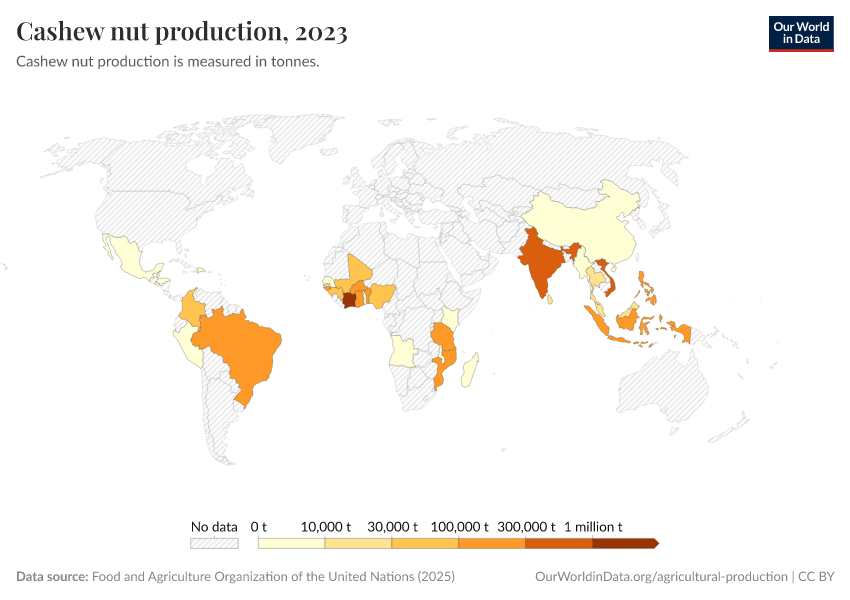
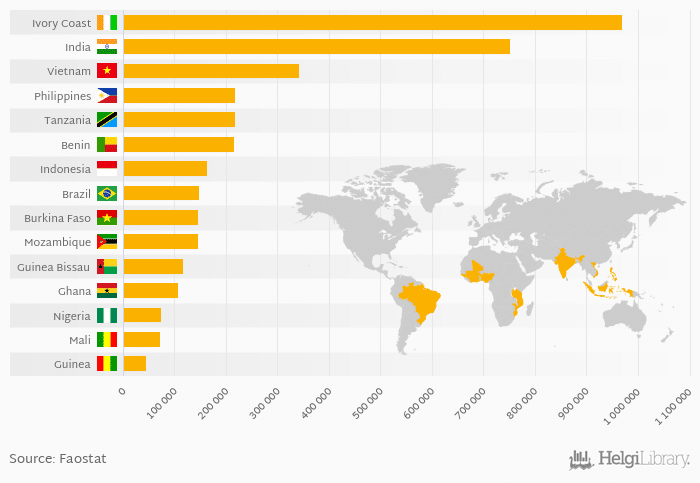
Tanzania stands as Africa’s leading cashew producer and East Africa’s undisputed cashew powerhouse. With production reaching 528,260 tonnes in the 2024/25 season and earning over $583.7 million in export revenue, Tanzania represents exceptional opportunities for establishing cashew nut processing facilities. Despite this massive production capacity, only 24 percent of cashews were processed locally in 2024, creating an urgent need and tremendous business potential for new processing plants in the country.
Why Tanzania is Africa’s Premier Location for Cashew Nut Processing Business
Tanzania’s position as the world’s third-largest cashew producer, combined with government initiatives to dramatically expand processing capacity, makes it an attractive destination for cashew processing investment. The country involves over 600,000 smallholder farmers producing over 300,000 metric tons of raw cashew nuts annually, with Mtwara, Lindi, and Ruvuma contributing approximately 80 percent of production.
The Tanzanian government has set ambitious targets for the cashew industry. The Cashew Board of Tanzania aims to increase cashew production to 1 million metric tons and process 100 percent of raw cashew nuts locally by 2030. For the 2025/26 season, the government has reaffirmed confidence in meeting its 700,000-tonne raw cashew nut production target, signaling continued growth and stability in raw material supply for processors.
Currently, Tanzania is home to 57 cashew nut processing factories with a combined installed annual processing capacity of 103,395 tonnes, though only 36 factories are currently operational. This infrastructure gap, combined with rising production volumes, creates exceptional opportunities for new processing facilities that can capture value currently lost to raw nut exports.
Unprecedented Government Support and Infrastructure Development
Maranje Cashew Processing Industrial Park
The Tanzanian government is making transformative investments in cashew processing infrastructure. Construction has begun on a massive cashew processing industrial park in Mtwara, costing approximately TZS 300 billion until completion, which includes 30 cashew processing factories and is expected to be complete by 2030. This industrial park will ultimately have processing capacity capable of handling 600,000 tonnes annually.
The first phase of this ambitious project is already advancing. By October 2025, one factory ready to process 3,000 tons of cashews should be operational, demonstrating the government’s commitment to rapid capacity expansion. The Cashew Board of Tanzania is completing two warehouses at the Maranje Industrial Park in Mtwara, each with a 10,000-tonne capacity, addressing critical storage challenges that have historically hampered the sector.
Additional Government Processing Facilities
Beyond the Maranje industrial park, Tanzania announced plans to construct four new cashew processing facilities by the 2025/26 season, including two factories in Tandahimba and Newala under the Tanzania National Cashew Cooperative Union, and another by the Tunduru Agricultural Marketing Cooperative Union. This comprehensive government-led infrastructure development creates a supportive ecosystem for private sector investment.
In October 2024, Tanzania launched a new factory costing TZS 3.4 billion that can process 3,500 tons of cashew nuts annually, demonstrating both government commitment and providing a benchmark for commercially viable processing plant setup cost.
Agricultural Input Subsidies Supporting Raw Material Supply
The government’s comprehensive support extends to farmer productivity enhancement. Subsidies for agricultural inputs, such as fertilizers and seedlings, have been vital in supporting farmers and helping to increase both the quantity and quality of the cashew nut harvest. The fertiliser subsidy programme has been transformative, with national consumption rising 84 percent from 457,855 tonnes in 2019/20 to 840,000 tonnes in 2023/24, benefiting cashew growers.
Nearly 240,000 subsidised seedlings were supplied to farmers in the 2023/24 season, ensuring continued expansion of cashew cultivation and long-term raw material availability for processing facilities.
Investment Incentives Through Tanzania Investment Centre
Fiscal Incentives for Cashew Processing Plants
Tanzania offers a competitive package of fiscal incentives administered through the Tanzania Investment Centre (TIC), now integrated into the Tanzania Investment and Special Economic Zones Authority (TISEZA). Tanzania offers zero-rated duty on capital goods and VAT thereon deferred for priority sectors including agriculture and manufacturing.
Import Duty Exemptions: Projects with Certificates of Incentives from TIC are eligible for import duty exemption of 75% on capital goods and deemed capital goods. This substantial reduction in equipment costs dramatically improves project economics, as processing machinery represents a major capital investment component.
Zero-Rated Agricultural Equipment: Zero-rated duty applies to capital goods, all farm implements, fertilizers, and pesticides, along with zero-rated VAT on these items. For cashew processing facilities, this extends to shelling machines, cutting equipment, grading systems, roasting machinery, and packaging lines.
Corporate Tax Rate: Tanzania maintains a reasonable corporate tax rate of 30% with low withholding tax on loan interest payments. While this standard rate applies to most processors, the government has been discussing additional tax incentives specifically for cashew processors to boost competitiveness.
Investment Registration Requirements
TIC grants Certificates of Incentives for all investments which are over US$ 300,000 for foreign investments and US$100,000 for local investments. Investors can obtain Certificate of Incentives in two phases, with the first phase validity of three years, and can apply for an extension of up to two additional years.
The registration process provides comprehensive support: TIC facilitates investors in obtaining necessary licenses, work permits, visas, approvals, facilities or services, and assists investors to secure investment sites. This one-stop shop approach significantly reduces bureaucratic complexity for international and domestic investors.
Non-Fiscal Investment Incentives
Beyond fiscal benefits, Tanzania provides substantial non-fiscal incentives: Unrestricted right to transfer outside the country 100% of foreign exchange earned profits and capital, automatic permits for employing an initial quota of 5 foreign nationals on projects holding Certificates of Incentives, and guaranteed transfer of net profits or dividends of the investment, payment in respect of foreign loans, remittance of proceeds net of all taxes.
Designated Cashew Processing Zones
The government has designated three Cashew Processing Zones for industrial-scale cashew processing at Tunduru in the Ruvuma region, and in Mtwara and Lindi regions, where investors get benefits like tax exemptions. These special economic zones provide additional advantages including streamlined approvals, infrastructure support, and clustering benefits with other cashew processors.
Access to Financing and Development Programs
Prosper Cashew Initiative
Tanzania is a beneficiary country of the $60 million Prosper Cashew initiative, a USDA-funded program implemented by TechnoServe. This program specifically targets strengthening commercial viability of cashew processing through capacity building, working capital access, and investment facilitation. The initiative provides technical assistance, market linkages, and financial support to qualifying processors.
British International Investment
International development finance institutions recognize Tanzania’s cashew processing potential. In December 2023, British International Investment announced a $15 million equity investment in cashew processing and warehousing infrastructure in Tanzania, with an option for an additional $35 million investment. These capital flows create partnership opportunities for local entrepreneurs and demonstrate growing confidence in the sector’s commercial viability.
Specialized Agricultural Financing
Tanzanian financial institutions increasingly recognize cashew processing as a strategic sector. While cashew processors have criticized financial institutions for their lack of enthusiasm in lending to cashew processors, the situation is improving. Development banks and specialized agricultural lenders offer working capital facilities tied to verified processing contracts, addressing the critical challenge of financing raw nut purchases during harvest seasons.
Tanzania’s Cashew Marketing Reforms and Price Transparency
Tanzania Mercantile Exchange Platform
One of the most significant recent improvements in Tanzania’s cashew sector is the introduction of the Tanzania Mercantile Exchange (TMX) auction system. The TMX digital auction system enhances market transparency, price discovery, and payment security, thereby promoting fair competition for farmers’ produce.
For the 2024/25 season, early auction prices ranged from 4,035 to 4,120 Tanzanian shillings per kilogram (approximately USD 1.48 to USD 1.51), representing significant improvements over previous seasons’ pricing. The TMX auction system stabilizes prices and aligns producer incentives with market demand, creating more predictable operating environments for processors.
TMX has been instrumental in providing training to stakeholders, including farmers, cooperative unions, and buyers, on the digital auction process, ensuring all participants can effectively navigate the system. For processors, this transparent platform facilitates direct relationships with farmer cooperatives and provides reliable price discovery mechanisms.
Early Market Access
Tanzania has reintroduced early market access for processors, addressing a critical competitive challenge. The reintroduction of the early market has improved the situation for processors competing with foreign buyers, giving domestic processors preferential access to raw cashew nuts before international trading houses enter the market.
Understanding Tanzania’s Cashew Nut Processing Requirements
Essential Processing Machinery and Equipment
A modern cashew processing plant in Tanzania requires specialized machinery at multiple production stages to transform raw cashew nuts into export-quality kernels meeting international food safety standards and buyer specifications.
Pre-Processing Equipment: Raw cashew handling systems including cleaning, grading, and moisture measurement equipment ensure incoming nuts meet quality specifications. Tanzania’s premium quality raw cashew nuts benefit from proper pre-processing that preserves inherent quality advantages. Investment in pre-processing equipment ranges from $20,000 to $50,000 depending on capacity.
Steam Cooking Systems: Industrial steam boilers are essential for cooking raw cashew nuts to optimal temperature and moisture levels before shelling. Proper steaming maximizes whole kernel recovery and minimizes breakage. Commercial steam boilers for medium-scale operations cost $30,000 to $70,000.
Cashew Shelling Machines: The core of processing operations, shelling equipment can be manual, semi-automated, or fully automated. There is potential in manufacturing cashew processing machinery through partnerships with the Small Industries Development Organization (SIDO) and international companies from Italy, India, China, and Vietnam. Complete shelling machine lines processing 1 tonne per day cost approximately $100,000 to $150,000, while larger 5-10 tonne daily capacity systems range from $400,000 to $600,000.
Nut Processing and Grading Equipment: After shelling, specialized cutting machines remove the testa (brown skin), followed by peeling, grading according to international standards, and quality control. Automated grading systems using electronic color sorters and optical technology cost $60,000 to $180,000 depending on sophistication and throughput capacity.
Packaging Machinery: Modern packaging lines with vacuum sealing, nitrogen flushing, and labeling capabilities preserve kernel freshness and meet export packaging requirements. Complete packaging systems cost $40,000 to $120,000 depending on automation levels.
Plant Layout and Facility Design Considerations
Successful cashew processing facilities in Tanzania incorporate specific design elements addressing local conditions:
Climate Considerations: Tanzania’s tropical climate requires proper ventilation, temperature control, and humidity management to maintain product quality. Processing facilities need adequate roof height, ventilation systems, and climate control in critical processing areas.
Workflow Optimization: Plant layout should follow logical flow from raw material receiving through storage, processing stages, quality control, packaging, and finished product warehousing. Efficient layouts minimize material handling costs and reduce processing time.
Worker Facilities: Adequate changing rooms, sanitation facilities, canteens, and first aid stations are essential both for regulatory compliance and worker welfare. Quality facilities attract and retain skilled workers in competitive labor markets.
Expansion Capacity: Land acquisition should account for future expansion as production scales. Successful processors typically expand capacity incrementally, requiring space for additional processing lines and storage facilities.
Understanding Tanzania’s Cashew Nut Processing Requirements
Essential Processing Machinery and Equipment
A modern cashew processing plant in Tanzania requires specialized machinery at multiple production stages to transform raw cashew nuts into export-quality kernels meeting international food safety standards and buyer specifications.
Pre-Processing Equipment: Raw cashew handling systems including cleaning, grading, and moisture measurement equipment ensure incoming nuts meet quality specifications. Tanzania’s premium quality raw cashew nuts benefit from proper pre-processing that preserves inherent quality advantages. Investment in pre-processing equipment ranges from $20,000 to $50,000 depending on capacity.
Steam Cooking Systems: Industrial steam boilers are essential for cooking raw cashew nuts to optimal temperature and moisture levels before shelling. Proper steaming maximizes whole kernel recovery and minimizes breakage. Commercial steam boilers for medium-scale operations cost $30,000 to $70,000.
Cashew Shelling Machines: The core of processing operations, shelling equipment can be manual, semi-automated, or fully automated. There is potential in manufacturing cashew processing machinery through partnerships with the Small Industries Development Organization (SIDO) and international companies from Italy, India, China, and Vietnam. Complete shelling machine lines processing 1 tonne per day cost approximately $100,000 to $150,000, while larger 5-10 tonne daily capacity systems range from $400,000 to $600,000.
Nut Processing and Grading Equipment: After shelling, specialized cutting machines remove the testa (brown skin), followed by peeling, grading according to international standards, and quality control. Automated grading systems using electronic color sorters and optical technology cost $60,000 to $180,000 depending on sophistication and throughput capacity.
Packaging Machinery: Modern packaging lines with vacuum sealing, nitrogen flushing, and labeling capabilities preserve kernel freshness and meet export packaging requirements. Complete packaging systems cost $40,000 to $120,000 depending on automation levels.
Plant Layout and Facility Design Considerations
Successful cashew processing facilities in Tanzania incorporate specific design elements addressing local conditions:
Climate Considerations: Tanzania’s tropical climate requires proper ventilation, temperature control, and humidity management to maintain product quality. Processing facilities need adequate roof height, ventilation systems, and climate control in critical processing areas.
Workflow Optimization: Plant layout should follow logical flow from raw material receiving through storage, processing stages, quality control, packaging, and finished product warehousing. Efficient layouts minimize material handling costs and reduce processing time.
Worker Facilities: Adequate changing rooms, sanitation facilities, canteens, and first aid stations are essential both for regulatory compliance and worker welfare. Quality facilities attract and retain skilled workers in competitive labor markets.
Expansion Capacity: Land acquisition should account for future expansion as production scales. Successful processors typically expand capacity incrementally, requiring space for additional processing lines and storage facilities.
Investment Requirements and Plant Setup Costs
Comprehensive Capital Investment Analysis
Establishing a cashew nut processing factory in Tanzania requires carefully structured capital allocation across land acquisition, facility construction, processing machines, working capital reserves, and regulatory compliance costs.
Land Acquisition: Suitable industrial land in cashew-growing regions varies significantly by location. In Mtwara, Lindi, and Ruvuma regions (primary production areas), industrial land costs range from $2,000 to $8,000 per hectare for long-term leases. A medium-scale processing facility typically requires 2 to 5 hectares for factory buildings, raw material storage, finished product warehousing, worker facilities, and future expansion space.
The government actively supports land access for cashew processors. TIC assists investors to secure investment sites, streamlining land acquisition processes that can otherwise be complex in Tanzania.
Factory Construction and Infrastructure: Building a modern cashew processing facility compliant with Tanzanian regulations and international food safety standards requires substantial investment.
For a facility designed to process 3,000-5,000 tonnes annually (benchmarked against recent government factory investments):
- Building construction and roofing: $150,000 to $300,000
- Electrical installation and backup power: $25,000 to $50,000
- Water supply infrastructure and treatment: $10,000 to $20,000
- Fire safety, security systems, and compliance infrastructure: $15,000 to $30,000
Total facility construction costs typically range from $200,000 to $400,000 for medium-scale operations, excluding processing machinery.
Processing Machinery Costs: Complete cashew nut processing machinery represents the largest single capital investment component.
- Small-scale operation(500-1,000 tonnes/year): $180,000 to $350,000 in processing equipment
- Medium-scale facility(3,000-5,000 tonnes/year): $500,000 to $1 million in complete processing machinery
- Large-scale industrial plant(10,000+ tonnes/year): $2 million to $3.5 million for fully automated processing lines
These costs benefit significantly from Tanzania’s 75% import duty exemption on capital goods for TIC-registered projects, potentially reducing equipment costs by $100,000 to $500,000 depending on project scale.
Working Capital Requirements: The most significant ongoing capital requirement for cashew processors is purchasing raw cashew nuts during harvest seasons. With cashew prices currently around Tsh 2,900 to Tsh 4,000 per kilogramme (US$1.14 to $1.57), processors face substantial working capital needs.
For a 5,000-tonne annual processing facility:
- Raw material purchase: 5,000 tonnes × $1,400/tonne average = $7 million
- Seasonal inventory financing: $1.75 million to $3.5 million in credit facilities
Access to working capital through TMX-facilitated contracts, development finance institutions, and commercial banks is critical for sustainable operations.
Licensing and Regulatory Compliance Costs:
- TIC Certificate of Incentives application and registration: $1,100 (including application and registration fees)
- Business Registration and Licensing Authority (BRELA) company registration: $500 to $2,000
- Tanzania Bureau of Standards (TBS) certification: $1,000 to $3,000
- Environmental impact assessment: $2,000 to $5,000
- Export licensing and Cashew Board of Tanzania registration: $1,000 to $3,000
Total Investment Summary
Small-scale cashew processing factory (500-1,000 tonnes/year):
- Land and site development: $8,000 to $20,000
- Building construction: $80,000 to $150,000
- Processing machinery: $180,000 to $350,000
- Working capital: $350,000 to $700,000
- Total estimated investment: $618,000 to $1.22 million
Medium-scale processing facility (3,000-5,000 tonnes/year):
- Land and site development: $15,000 to $35,000
- Building construction: $200,000 to $400,000
- Processing machinery: $500,000 to $1 million
- Working capital: $2.1 million to $4.2 million
- Total estimated investment: $2.8 million to $5.6 million
Large-scale industrial plant (10,000+ tonnes/year):
- Land and site development: $30,000 to $60,000
- Building construction: $400,000 to $800,000
- Processing machinery: $2 million to $3.5 million
- Working capital: $7 million to $14 million
- Total estimated investment: $9.4 million to $18.4 million
Regulatory Requirements and Registration Procedures
Business Registration Through BRELA
All cashew processing businesses must register with the Business Registration and Licensing Authority (BRELA). Entrepreneurs can register as:
- Limited liability company (recommended for medium to large-scale operations providing liability protection and facilitating investment)
- Partnership (suitable for smaller family businesses)
- Sole proprietorship (for micro-scale operations)
BRELA registration typically requires 5-10 working days and can be completed through TIC’s one-stop facilitation center.
Tanzania Investment Centre Registration
For projects meeting minimum investment thresholds ($100,000 for Tanzanian-owned, $300,000 for foreign-owned), TIC registration provides access to substantial incentives. The Centre charges US$100 for an application form and US$1000 for the registration fee and it takes not more than 3 working days to issue certificate of incentive to a qualified investor.
Required documentation includes:
- Detailed project proposal and business plan
- Proof of financial capability
- Company registration documents
- Environmental impact assessment
- Technical specifications of processing equipment
Cashew Board of Tanzania Registration
All cashew processors must register with the Cashew Board of Tanzania (CBT), the government agency regulating Tanzania’s cashew sector. CBT registration provides:
- Legal authority to purchase raw cashew nuts from farmers and cooperatives
- Access to TMX auction platform for raw nut procurement
- Export certification and documentation support
- Industry information and technical assistance
- Networking with farmer organizations and industry stakeholders
Tanzania Bureau of Standards Certification
The Tanzania Bureau of Standards (TBS) regulates food processing operations. Cashew processors must obtain:
- Factory inspection and certification demonstrating compliance with food safety standards
- Product certification for each cashew product produced
- Good Manufacturing Practices (GMP) compliance verification
- Regular facility inspections and annual recertification
Export Licensing and Documentation
Processors targeting export markets require:
- Export license from the Ministry of Industry and Trade
- Product quality certification from TBS
- Phytosanitary certificates from the Tanzania Plant Health Inspection Service
- Chamber of Commerce registration and certificate of origin documentation
Challenges Facing Tanzanian Cashew Processors
High Levy Charges on Processed Products
Processors have highlighted high levies imposed on processed cashew nuts, stating that for every kilo processed, a levy of Sh2,280 is charged on top of transport costs. These charges reduce competitiveness compared to processors in other countries and create advocacy opportunities for industry associations to engage government on policy reforms.
Competition with Foreign Buyers
Despite rising output, Tanzania processes only a fraction of its cashew harvest, with over 400,000 tonnes of raw cashews exported annually. Foreign buyers, particularly from Vietnam and India, have established purchasing networks, offer immediate cash payment, and benefit from decades of farmer relationships.
Mitigation Strategies:
- Leverage early market access programs giving domestic processors preferential timing
- Develop farmer financing programs providing competitive advance payments
- Build long-term farmer relationships through fair pricing and reliable payment
- Offer technical support and agricultural inputs improving farm productivity
Seasonal Working Capital Constraints
Seasonal harvest gaps and limited storage compel processors to import West African nuts to keep factories running year-round. Processors need 60-80% of annual revenue as working capital during October-February peak harvest period, creating substantial financing challenges.
Mitigation Strategies:
- Access development finance institution working capital facilities
- Participate in Prosper Cashew and similar programs providing seasonal financing
- Develop relationships with international trading houses offering trade finance
- Consider cooperative models where farmer groups invest in processing
Technical Skills and Capacity Development
While Tanzania has abundant labor, skilled workers experienced in modern cashew nut processing techniques remain scarce. TechnoServe launched the Prosper Cashew program to train Tanzanian farmers in post-harvest handling and market linkage best practices, and similar programs are needed for processing workers.
Mitigation Strategies:
- Implement comprehensive worker training programs
- Partner with technical schools and agricultural training institutes
- Provide competitive wages and benefits attracting quality workers
- Consider gradual automation as scale increases
Success Strategies for Cashew Processing Investment in Tanzania
Strategic Location Selection
Factory location significantly impacts profitability through effects on raw material costs, logistics efficiency, and infrastructure access.
Optimal Location Criteria:
- Proximity to Mtwara, Lindi, or Ruvuma regions (80% of national production)
- Access to Mtwara Port for export logistics (preferential government support)
- Available industrial electricity or reliable power alternatives
- Sufficient water supply for processing operations
- Local labor availability
- Land suitable for current operations and future expansion
- Consider locations within or near designated Cashew Processing Zones for additional incentives
Leveraging Government Infrastructure Investments
Large cooperatives and private stakeholders are building new storage facilities, while CBT is completing warehouses at the Maranje Industrial Park. Processors can benefit from this infrastructure through:
- Utilizing government warehouses for raw material storage
- Locating processing facilities near industrial parks benefiting from shared infrastructure
- Partnering with government on warehouse lease arrangements
- Coordinating with Cashew Board on logistics optimization
Building Strong Farmer Relationships
Processors who invest in farmer relationship development secure competitive advantages:
Farmer Partnership Programs:
- Establish transparent pricing mechanisms updated based on TMX market information
- Provide agricultural extension services and technical training
- Offer advance payment schemes giving farmers working capital
- Develop contract farming arrangements providing mutual commitments
- Support farmer access to improved planting materials
- Consider cooperative models where farmers have ownership stake
ANSAF has partnered with KITAMA and WAKORU cashew farmer processor associations to enhance processing capacity, improve financial inclusion, and develop markets, demonstrating successful partnership models.
CONTACT FORM
We understand selecting the ideal cashew processing machinery is a crucial decision for your business. Filling our simple contact form will help us grasp your requirements accurately and suggest customized solutions for long-term efficiency gains. Our team will get in touch shortly to initiate the best pricing and features discussion for your upgrade needs.